
This is a call for the sailors among us, current and future ones. Imagine this: Next time you sail with your ship, be that a beloved single-handed nutshell or a comfort-loaded bigger one, with friends or family: Without bigger extra effort you’ll make an essential contribute to saving our planet, too. No additional costs involved. Just by sailing and having fun as usual. How does that sound? It has a name: Sailors for ocean science. Sailors cruising the oceans increasingly often help ocean scientists gather a great variety of urgently needed data about marine life. You’d sail the 7 seas and help ocean science on your way.
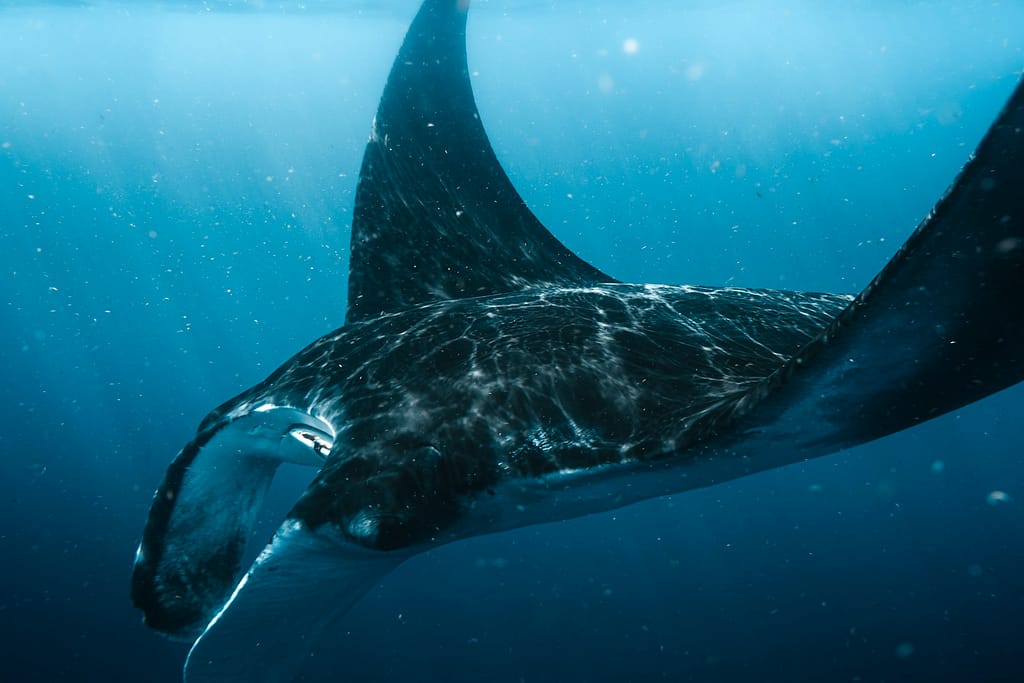
Marine life. Photo by Andre Kaim on Unsplash
Why sailors?
Is is well known: Hardly any scientific work is possible without sufficient accurate, reliable data coming in at a useful frequency. To understand and predict processes like ocean weather patterns, ocean acidification or what impacts our ocean’s food web, much more data is needed than we currently
have. Oceanography needs funding for research trips – impressive amounts of it. Funds in many cases are very limited though. Consequently, collected data to date still is very scarce, certainly considering the huge areas that have to be examined yet. We need to gather and evaluate huge amounts of scientific quality data way sooner (think: Paris talks, COP) than traditional funding schemes currently can enable. Which is where the sailors come in.
Crowd-sourcing ocean data to save our oceans and rivers
Thanks to growing numbers of technologically advanced sailing vessels out there – and I mean: real big numbers and almost everywhere out there, since affordable GPS and other smart technology came up – a viable option appeared at the horizon, apt to provide a wonderful pragmatic solution!
Small vessel, bigger one, awesome looking or your loyal, charming, not-so-chic looking, but brave and seasoned old friend: It doesn’t matter as long as you can cruise safely with your ship. No fancy equipment needed. No big money funds. Sailors, normal citizens like you and me, have begun to help marine science by gathering scientific data. And thus far this appears a golden match:
- Sailors not only have the health of our oceans high on their list of priorities anyway.
- They also know quite well how to move out there (think of navigational skills & equipment, suitable all-weather gear), often even in extremely remote areas and practically all year round.
- They constantly observe nature per default – weather patterns and tidal currents, for instance. Best thing of all,
- they love to contribute and get involved. For many of them, the short actions to perform for science – if any at all, I’ll get to this shortly – are a very welcome break of their simple routines out on the water, too. Especially during longer trips.
Now multiply this fine combination by a few thousand worldwide and you get the excellent potentials.
Here is how it works.
Long live Internet which allows to contact the respective project quickly and easily. - Just visit the websites mentioned in this article.
- You get in touch with a project, meet up, tell them your planned sailing route.
- They provide the measuring / data collection device and where applicable, will give you some basic training: How to use that device and what type of data to collect. So when you cast off, your ship will have a little silent guest aboard: A simple small device, for instance, to use later on for a few minutes during your cruise, every once in a while. Or a device fixed at the stern pulpit of your ship, without further action needed from your side. And not obstructing sailing in any way. The point is to collect scientific data and in some cases, get samples, too: From the air and the water while your ship is moving. Some devices have to be actively operated by the sailors to collect samples. Maybe in combination with an app on your smartphone. Others do the job passively and all by themselves.
- Once in a while, you either send collected data to a remote centre.
- Others you just return when you come back from your cruise and they’ll be read out by the scientists.
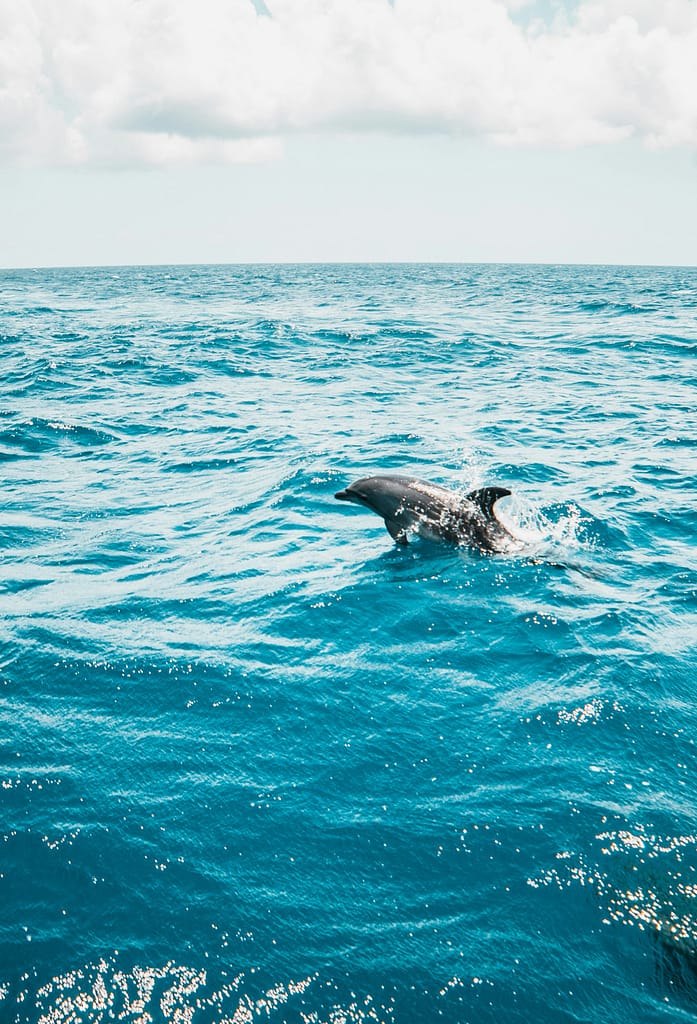
Quick, what is it? Sure? More of them around? Citizen science is fun.
Photo by Haniel Espinal on Unsplash
What kind of projects and devices?
Some examples. Let’s start with the laziest variant: Meet OSMO, your spacy little passenger! OSMO stands for Ocean Sailing Microbial Observatory (OSMO) and is “an auto-sampling device that collects meta-data such as temperature, pH and salinity. The OSMO records time, date and location of
the vessel at the time of sampling. The raw data is sent to the Indigo lab via satellite SMS and we are able to put a time and location stamp on every sample. Microbial data is also collected via seawater filtration to be further analyzed onshore. Involvement for sailors is easy and free! OSMO will be
attached to the stern pulpit using sturdy integrated hard plastic brackets. It is fully automated, and supplies its own power. Sailors do not need to operate the OSMO and it does not slow sailing performance.”
That was a verbatim quote from the wonderful Sailors for the Sea website, precisely, from this article. Extra eye on their Green Boating Guide.
There is more. Now, think about a short and interesting activity break of your afternoon laziness aboard:
Your smartphone and a Secchi disk
This project involves the measuring of marine phytoplankton. It is done with the help of a so called Secchi disk, an equally simple as ingenious device named after its inventor (Angelo Secchi, disk invention: 1865): A “30 cm, flat, white disk attached to a tape measure or a rope, and weighted from
below by a small 200g weight.” Says Dr. Richard Kirby of Plymouth University who conducts this citizen science project. Gradually lowered into the water, the disk will reveal water turbidity there, proportional to water depth. Dr. Kirby also runs a great informative website about it called planktonpundit.org. It is packed with most fascinating information about the micro-cosmos of marine life – and, of course, on the methods of modern ocean science.
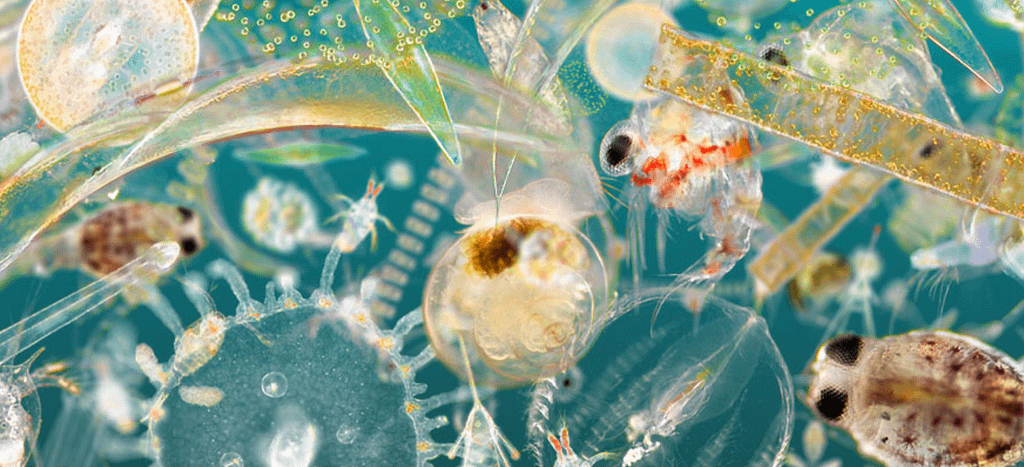
Screenshot from the Plankton pundit website.
Another project kindly inviting your laid-back involvement has the scope to detect metals contained in seawater. This would require using “a pole with a bottle on the end and then processing the samples cleanly in a clean-air enclosure in, well, in the galley”! Explains Jay Cullen in an article published
by The Globe and Mail from Canada. With their Indigo V Expeditions, Cullen and his team did a pilot project in 2013 sailing from Cape Town, South Africa to Phuket, Thailand. The projects of this organization collect essential scientific data about – types of algae and bacteria present on the surface of the ocean and how they’re affected by metals, – microbes, viruses, bacteria and algae that form the base of the oceanic food chain, – those responsible for key ocean processes such as carbon fixation and photosynthesis as well as – the impact of shipping traffic on ocean biology and chemistry.
Indigo V Expeditions uses also the above described little OSMO. Here is their website rich of specific information including the contact details.
The above are just a few examples for a growing variety of citizen science projects for the oceans, far from the world of huge budgets. You don’t need a university degree, leave alone a chic super yacht to participate. As long as your ship can cruise the open sea. Those kinds of projects out at sea
complement similar awesome marine science initiatives, among which the Seawatch Foundation or the Marine Conservation Society:
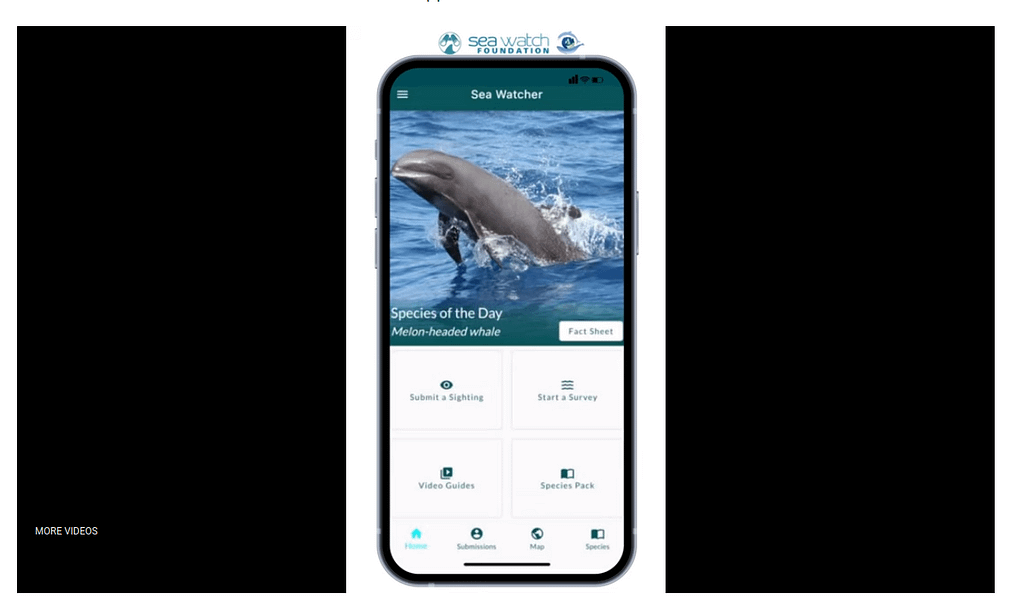
Screenshot form the Seawatch Foundation website. They have a fine tutorial there about how to use their sightings app.
Quote form their website about the sightings app:
“The app allows for opportunistic sightings as well as dedicated surveys and is equipped to deal with both land and boat-based recording. All sightings can be viewed on a map and there are a number of handy resources which will help identify what you’ve seen. In addition, there is a code of conduct for boat users, advice on photography, and details of what to do and who to contact if you find a stranded animal, either live or dead. It’s a great little pocket resource and an amazing opportunity to contribute to one of the longest running cetacean sightings networks in the world!”
Or what about the NASA funded Floating Forests project – here their fascinating summary: “We are trying to understand how forests of kelp grow and change over time. We need your help to find these forests in pictures from space!” Indeed NASA has a citizen science department certainly also worth to explore – see here. So with well-equipped NASA doing research about kelp from space, where is the need for input from citizens? Turned out, the floating forest project still welcomes crowd sourcing, quote: “The images you’re looking at come from photographs taken from the Landsat series of satellites. These satellites photograph the entire surface of the earth every 16 days, and have been doing so since 1984. When one of our project scientists first began working with these images, he had hoped he could just throw the hundreds of thousands of images into some image classification software, and have the software tell him where kelp was located. There’s just one problem: Kelp is tricky.” – And they go on to explain why. Details here.
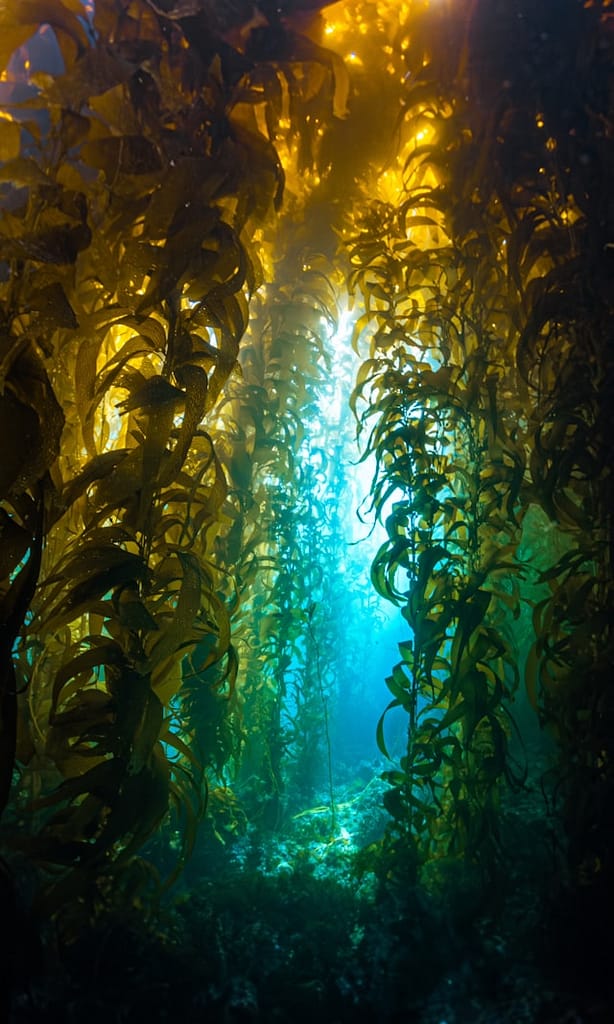
An underwater kelp forest – bet that Tolkien would love it, too!
Photo by Erick Morales Oyola on Unsplash.
Who ever said that saving the planet can’t be fun, rewarding and inspiring as well, all daunting tasks and ticking clocks aside? On a final note: If you have friends who love this citizen science concept but have no whatsoever affinity to water and / or sailing, send them to the above named NASA website
or point them to this article. It describes citizen science opportunities mainly for land based projects,
Have fun out there!